



Laser Gum Therapy in Murfreesboro: How It Treats Gum Disease With Less Downtime
April 21, 2026 9:00 amDuring your dental visit, the conversation sometimes shifts from your teeth to your gums in a way that feels a little unexpected.
You might come in focused on a specific tooth or just expecting a routine cleaning, and then somewhere along the way, Dr. Ashley Costello or Dr. Alaina Skidmore points out bleeding, inflammation, or areas where the gums aren’t sitting as tightly around the teeth as they should. It’s not always something that’s been bothering you day to day, but once it’s mentioned, it tends to line up with things you’ve noticed—like a little bleeding when brushing or tenderness that comes and goes.
From there, the conversation naturally moves into what’s actually going on and what it takes to treat it. At that point, most people aren’t just thinking about the condition itself—they’re also thinking about what treatment will feel like and how much it will interrupt their routine. That’s usually where laser gum therapy enters the picture as an option worth considering.
How Gum Disease Develops Over Time
To understand why treatment is needed in the first place, it helps to look at how gum disease develops.
It often begins with plaque building up along the gumline, leading to mild inflammation. At that stage, the signs can be easy to brush off—slight bleeding when flossing or gums that look a little redder than usual. Since it doesn’t always cause pain, it’s common to assume it’s something minor.
As time goes on, though, that inflammation can move deeper. The gums begin to pull away from the teeth, forming small pockets where bacteria collect. Because those areas sit below the surface, they’re not something you can fully clean at home. Gradually, the condition shifts from something you can manage with brushing alone to something that needs more focused treatment.
How Laser Gum Therapy Works
When those deeper areas need to be treated, laser gum therapy offers a more targeted approach.
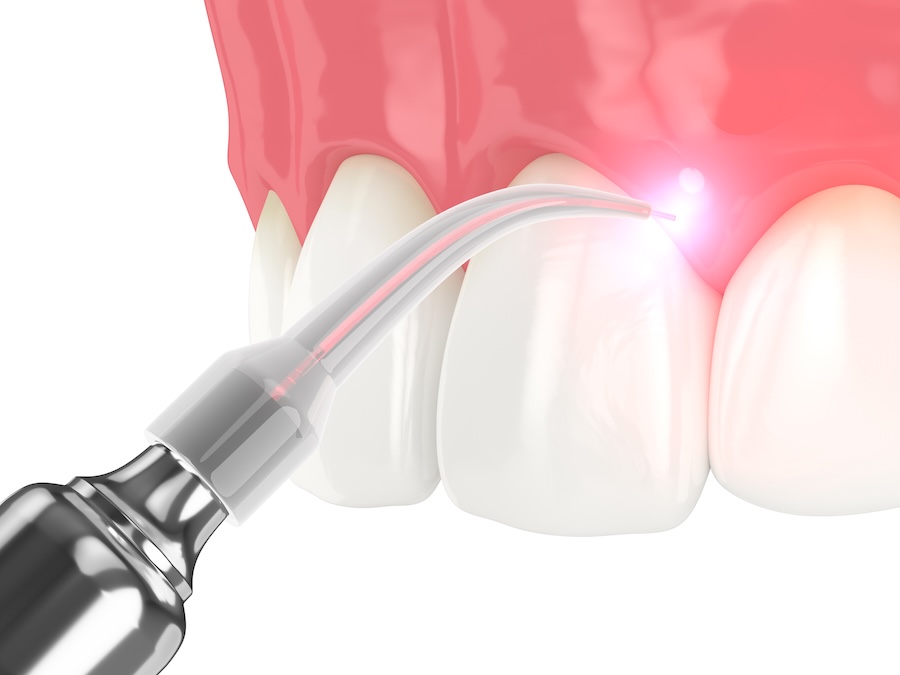
Instead of relying only on traditional instruments, a dental laser is used to remove infected tissue and reduce bacteria within the gum pockets. At the same time, the root surface of the tooth is cleaned, which helps create a smoother surface that’s less likely to hold onto buildup going forward.
What makes this approach different is the level of precision. The laser can be directed specifically at the affected areas, which allows treatment to stay focused without unnecessarily disturbing surrounding tissue. That precision plays a role not just in how the procedure is performed, but also in how the gums respond afterward.
How It Compares to Traditional Gum Treatment
When comparing laser therapy to more traditional gum treatment, the overall goal is the same—removing bacteria and helping the gums heal.
Traditional scaling and root planing uses instruments to clean below the gumline and smooth the root surfaces. It’s effective, but it can feel more physically involved since it relies on manual techniques to reach those deeper areas.
With laser therapy, the process tends to feel more controlled. Because the laser is doing much of the work of targeting bacteria and removing diseased tissue, there’s often less pressure on the gums during the procedure. For many patients, that difference changes how the experience feels in the chair and how the gums feel afterward.
What “Less Downtime” Really Means
When people hear that laser gum therapy involves less downtime, the question usually becomes what that looks like in real terms.
After treatment, it’s still normal to have some sensitivity, especially in areas that required more attention. However, that soreness is often manageable and doesn’t tend to interfere as much with your usual routine. You may need to adjust what you eat for a short time or be a little more gentle when brushing, but most daily activities can continue as usual.
Because of that, many patients find they don’t need to step away from work or significantly rearrange their schedule. The recovery becomes something that fits into your normal day rather than something that puts everything on hold.
Why Precision Matters for Healing
The more targeted nature of laser therapy also plays a role in how the gums heal afterward.
By focusing on removing only the infected tissue, the treatment helps preserve more of the healthy gum structure. That gives the gums a better starting point as they begin to reattach and stabilize around the teeth.
As healing progresses, those treated areas often become easier to keep clean, which supports the results of the procedure over time. While ongoing care is still important, starting from a healthier baseline makes that routine more effective.
What Happens After Treatment
Once treatment is complete, the focus shifts toward maintaining the progress that’s been made. You’ll receive guidance on how to care for your gums while they heal, including brushing techniques and any temporary adjustments that may help keep the area comfortable. Follow-up visits are also important, since they allow our team to check how the gums are responding and make sure everything is moving in the right direction.
Over time, the goal is to reduce the depth of those gum pockets and create an environment that’s easier to maintain with everyday care.
How This Fits Into Long-Term Gum Health
Looking beyond the procedure itself, the bigger picture is keeping gum disease from returning.
Regular dental exams and cleanings help monitor your gum health and catch any early changes before they develop further. At home, consistent brushing and flossing support that effort by keeping plaque from building up again along the gumline.
When those habits are combined with the initial treatment, it becomes much easier to maintain healthier gums and avoid more involved care down the line.
Laser Gum Therapy in Murfreesboro, TN at Salem Creek Family Dental
At Salem Creek Family Dental in Murfreesboro, TN, Dr. Ashley Costello and Dr. Alaina Skidmore take the time to walk through what’s happening with your gums and what treatment options make sense for your situation. The goal is to address the condition while keeping the experience as comfortable and manageable as possible.
If you’ve noticed bleeding gums or have been told you may need treatment, it’s worth having a conversation about what that could look like. A comprehensive dental exam can help you understand where things stand and whether laser gum therapy is the right fit for you.
Categorised in: Gum Health, Laser Therapy